



Public resources and initiatives
20/32 Heroiv Kruty Boulevard
м. Chernivtsi, Ukraine, 58000
Tel.: +380930676595,
e-mail: fsri.office@gmail.com
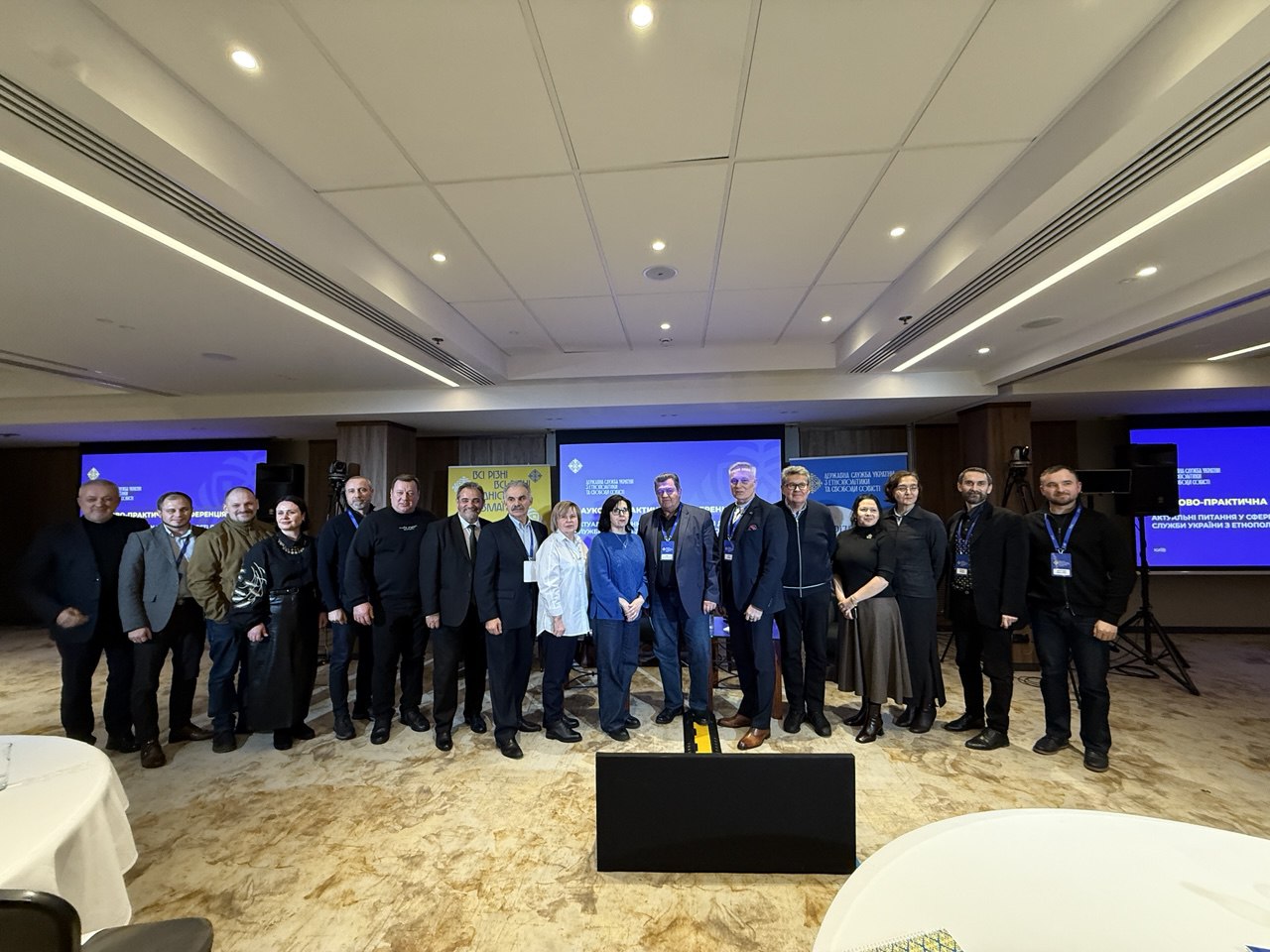
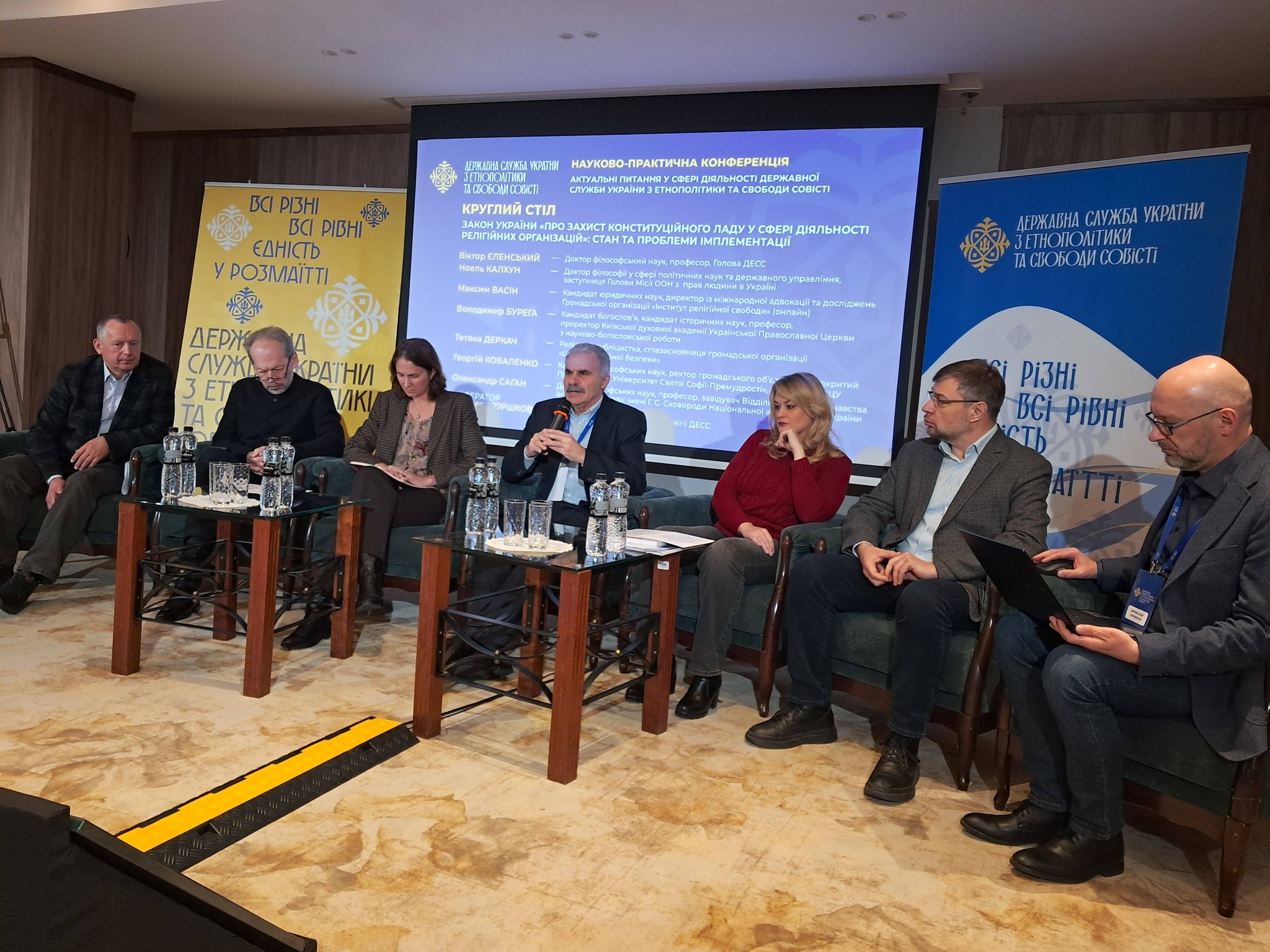
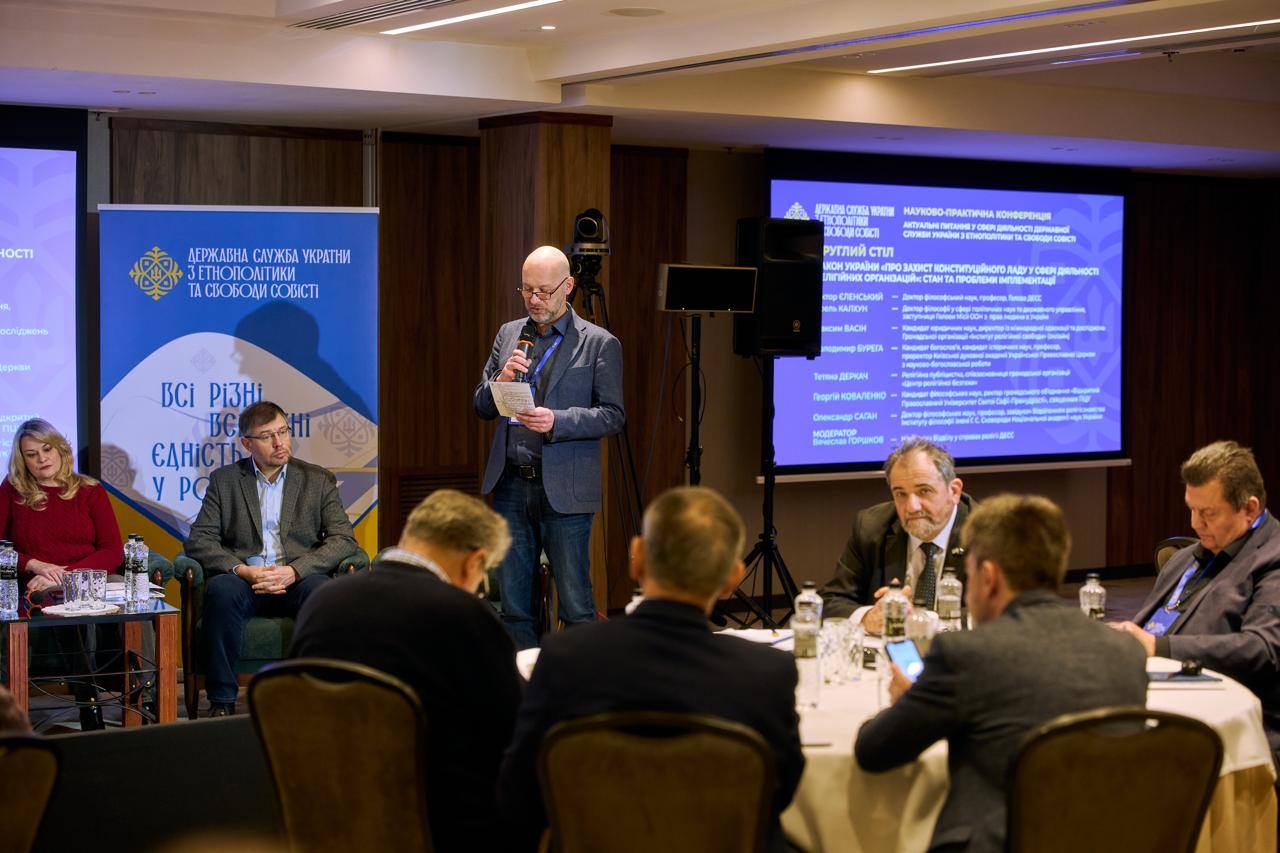
On 15 December 2025, an academic and practical conference entitled “Current Issues in the Activities of the State Service of Ukraine for Ethnopolitics and Freedom of Conscience” took place in Kyiv.
The event brought together representatives of state authorities, members of parliament, scholars, and international experts for an in-depth discussion of issues that have become particularly significant for Ukraine in the context of the full-scale war and against the backdrop of European integration.
The focus of the conference included the state of ethno-confessional relations in the country, practical aspects of implementing current legislation, and the creation of conditions for the harmonious coexistence of different communities within Ukraine’s multinational society. Special emphasis was placed on the protection of the rights of national minorities (communities) and indigenous peoples of Ukraine, as well as on fulfilling international obligations in the context of Ukraine’s path toward the European Union.
Historically, Ukraine has developed a model of societal development based on equality among different ethnic and religious communities and the absence of dominance by any single group. According to international assessments, this model has enabled Ukraine to avoid deep interethnic conflicts and to establish relatively high standards of mutual respect and dialogue. At the same time, as noted by the Head of the State Service of Ukraine for Ethnopolitics and Freedom of Conscience, despite this positive experience, challenges remain in the field of interethnic and intercommunity relations that require continuous attention from the state and the expert community.
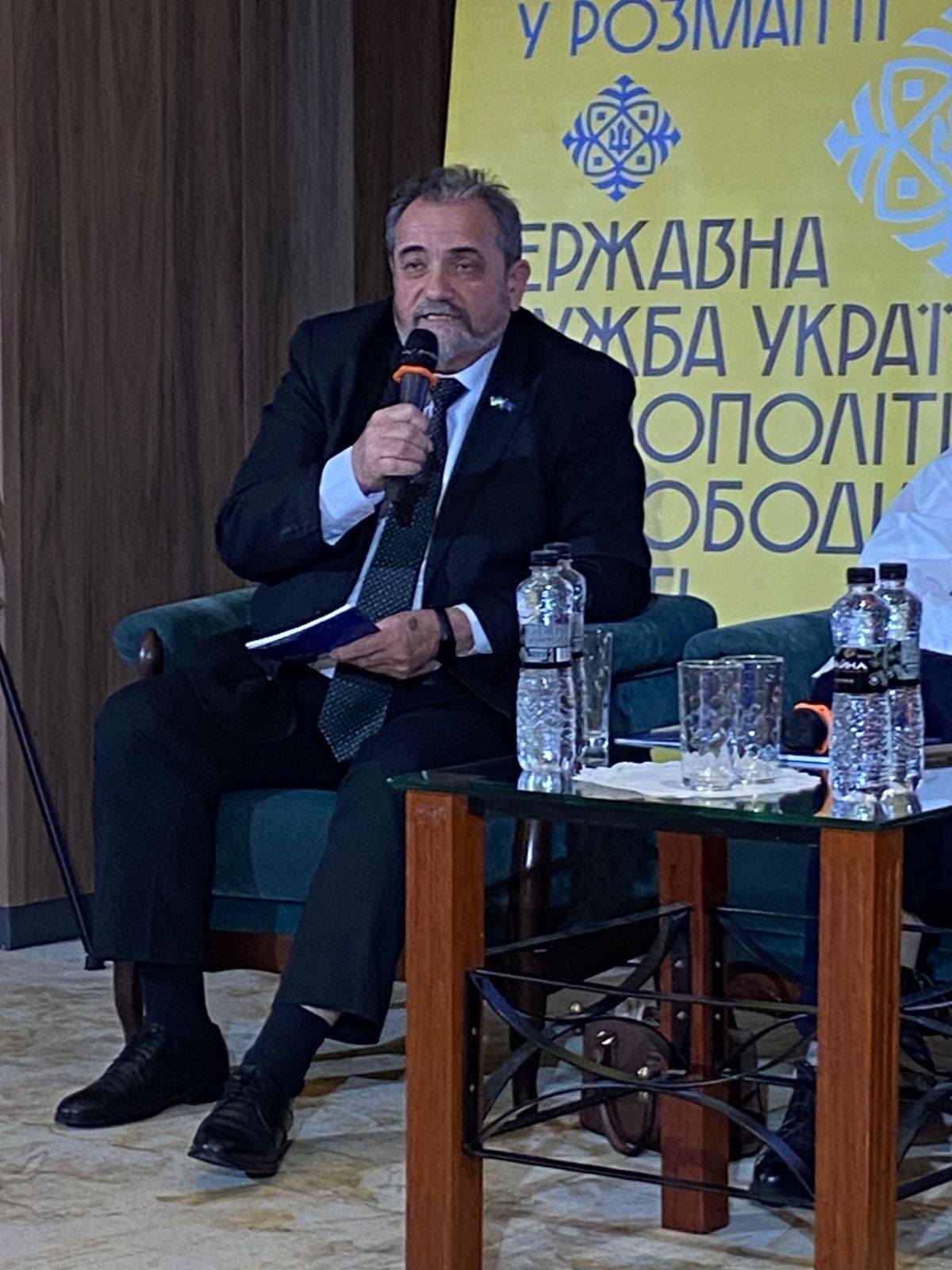
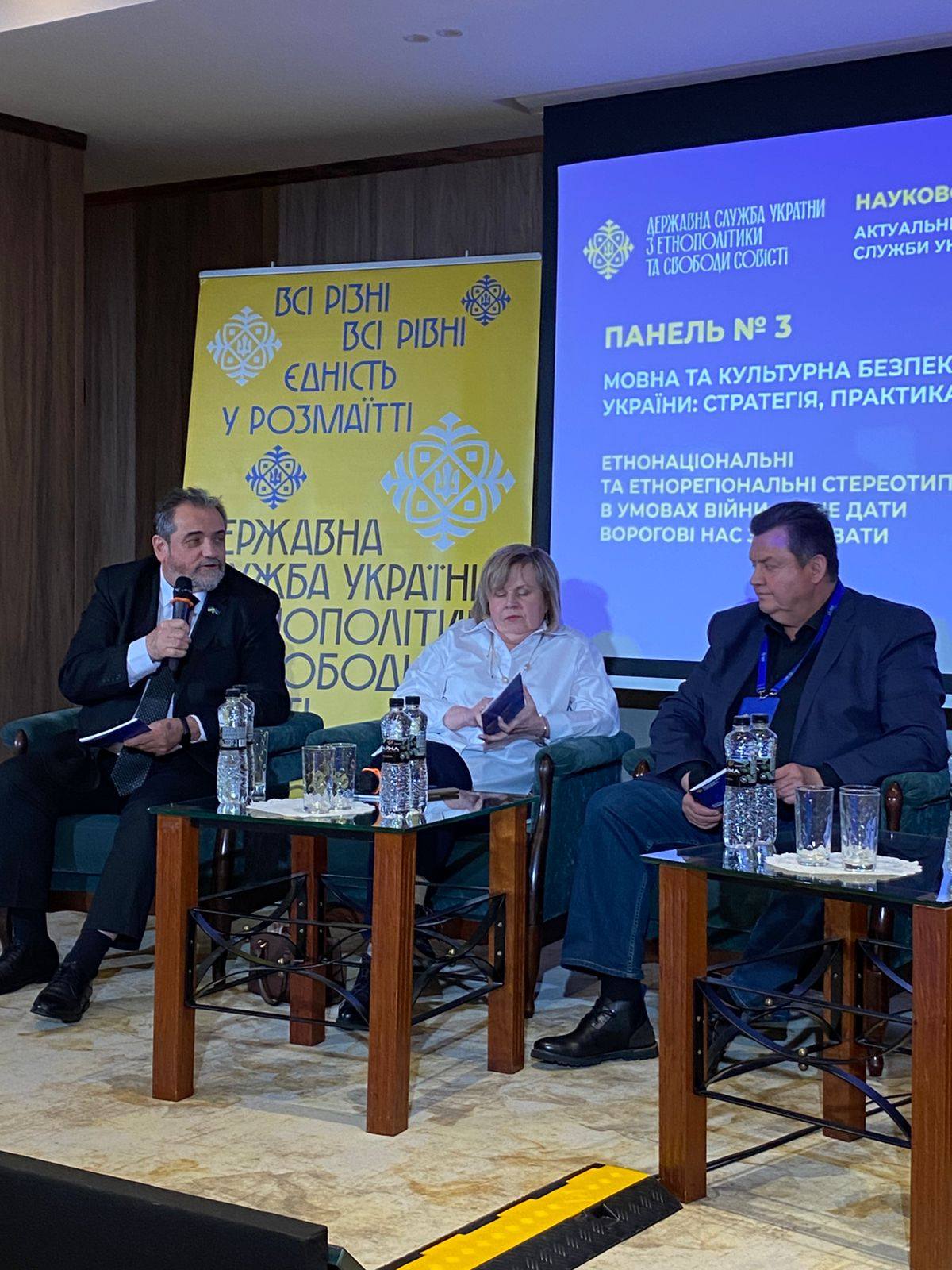
A separate panel of the conference was devoted to the linguistic and cultural security of Ukraine’s national communities. In his presentation, Serhii Hakman, Vice-President of the Public Resources and Initiatives Charity Foundation, Deputy Director of the Chernivtsi Regional Training Center, and Deputy Head of the Regional Council on Ethnopolitics under the Chernivtsi Regional State (Military) Administration, focused on ethno-national and ethno-regional stereotypes in times of war. He emphasized that the ethnic factor in border regions affects not only internal stability but also relations with neighboring states.
As an example, he cited Chernivtsi region, where a complex process of ethno-cultural self-identification and differentiation between Romanians and Moldovans is ongoing. According to him, these issues are often instrumentalized during electoral campaigns both in Ukraine and abroad. To overcome stereotypes, Serhii Hakman proposed more active engagement of local television channels and online platforms by filling them with high-quality informational content or telling the story of the region through the lives of specific individuals. As an example, he referred to a television project of the Public Resources and Initiatives Charity Foundation aimed at minimizing ethno-national and ethno-regional stereotypes of mutual perception, as well as a series of successful projects united under the common title “Simple Faces of a Complex History.”
 |
 |
The conference in Kyiv demonstrated that ethnopolitics in Ukraine today is not a narrow field of humanitarian policy but one of the key dimensions of national resilience. The discussions confirmed that issues of language, identity, the rights of national communities, and freedom of conscience are no longer purely academic — they directly affect internal unity, the country’s international reputation, and society’s capacity to resist external aggression.
Participants effectively outlined the central dilemma of contemporary Ukrainian ethnopolitics: how to maintain a balance between strengthening the role of the Ukrainian language and culture as the foundation of statehood while preserving the inclusive character of the civic nation. The presentations by scholars and practitioners showed that society already largely operates according to the principle of “unity in diversity,” while the regulatory framework and governance decisions do not always keep pace with these processes.
It should be noted that since April 2025, Serhii Hakman has been a member of the Expert Council on Ethnopolitics of the State Service of Ukraine for Ethnopolitics and Freedom of Conscience.
 |
 |